Se afișează postările cu eticheta Oil. Afișați toate postările

62) Oil and Blood : Exxon & Total - from today, backward to the roots

In tombs of gold and lapis lazuli
Bodies of holy men and women exude
Miraculous oil, odour of violet.

But under heavy loads of trampled clay
Lie bodies of the vampires full of blood;
Their shrouds are bloody and their lips are wet.

“Oil and Blood” by William Butler Yeats (1928)


2017, November 15 : US Secretary of State Rex Tillerson makes unexpected 24h-visit to Romania: the first visit an official of President Donald Trump’s administration makes in Romania. US troops are stationed in Romania at the Mihail Kogalniceanu - near Black Sea, and Deveselu military bases, the later hosting the US anti-missile defense system Aegis Ashore.
Exxon (former "Standard Oil Co. of New Jersey") and OMV Petrom (Romanian subsidiary of "Österreichische MineralölVerwaltung") will start the extractions of natural gas from the Black Sea in 2020.

2017, February : Rex Tillerson sworn in as Trump's Secretary of State.
It is no secret in Washington DC that Rex Tillerson and President Donald Trump have had a difficult working relationship.
Tillerson joined Exxon in 1975 and rose to serve as its chairman and chief executive officer (CEO) from 2006 to 2016.


2013 : Vladimir Putin awarded ExxonMobil CEO Rex Tillerson the Order of Friendship, one of the highest honors Russia gives to foreign citizens. Tillerson was responsible for the development of a partnership between Exxon and state-owned oil company Rosneft and the ultimately unsuccessful attempt to acquire a stake in Yukos, owned by Mikhail Khodorkovsky, before the firm was nationalized after Khodorkovsky's arrest.

2012 : ExxonMobil and OMV Petrom announced the Domino-1 exploration well encountered natural gas in the deep water sector of the Neptun Block.

2008 : ExxonMobil has been present in Romania's upstream sector when it acquired an interest in the deepwater Neptun Deep block in the Black Sea. The Neptun Block deepwater sector covers an area of approximately 7,500 square kilometres in water depths ranging from 100 to 1700 meters.

2005 : TOTAL Romania was founded in 2005 as a joint venture between TOTAL (France) and LUSTIC (Romania).

1998 : TOTAL takes over "Petrofina", its Belgian rival, creating the world's sixth largest oil company.

1945 to 1971 : Victor de Metz (1902-1982) was President of "Compagnie Française des Pétroles" (today TOTAL).

1939 : The French ministry of public works assigned Léon Wenger (1879-1962, President of "Petrofina France") the task of preparing for the destruction of the Romanian petroleum industry should the oil fields be in danger of falling into enemy hands.

1931 : Kinley, Myron Macy (1898–1978) traveled to Moreni to observe the two-year-old "Standard Oil" number 160RA oil well fire, considered impossible to extinguish. It had created a crater 250 feet across and 65 feet deep. Kinley's team tried various techniques, killed the fire, capped the well, and captured world headlines, and Kinley became a celebrity. Myron Macy Kinley died on May 12, 1978, and was buried at Chickasha. He was almost totally deaf, his back was scarred with burn tissue, and he was partially paralyzed from a lifetime in one of the world's most dangerous jobs.

1928 : Marie Victor Raoul de Metz was recruited in 1924 by Ernest Mercier at "Compagnie Française des Pétroles" - CFP (today TOTAL), at the initiative of the French Government - and he was given the opportunity to join "Steaua Română" French team.

1922 : Ernest Mercier - an illustrious french engineer (future TOTAL first president, from 1924 to 1940), along with the Anglo-Persian group, took control of the "Steaua Română", the largest oil company in Romania; the same year, he had created the "Steaua Française", of which he had become president. Ernest Mercier is one of the most influential business managers in interwar France. His different industrial activities led him to oversee large areas of the French economy, notably in the energy sector. Certain banks decided to approach oil business by allying themselves with the different international trusts. This was the case for the French bank Paribas, whose Romanian holdings Mercier managed.

With Pure Oil of Delaware, Petrofina founded Purfina, a distribution company in Belgium and Holland that became a wholly own subsidiary of Petrofina in 1923
1920 : "PetroFina" - a company that will play a key role in the economy and society of 20th century Belgium, was established by a group of Antwerp investors and bankers. The foundation of the company comes from the acquisition of German companies' assets in Romanian companies. "La Compagnie Financière Belge des Pétroles" brings together the assets of Romanian companies: "Rumeensche Petroleummaatschappij" (The Romanian Oil Company, better known as "Internaţionala" or "Interum"), "Concordia" (Romanian Public Limited Company for Oil Industry), Sirius, Creditul Petrolifer and Vega (a subsidiary of Concordia).

1917, June 12th : The Moreni 354' armed "Standard Oil of New York" tanker (loaded with 4,500 tons of benzine) was the first armed American ship lost in a surface battle with a submarine, in World War I. Over 250 shells were fired over a period of two hours. The sub was identified as U-64. Out of a total crew of 47 on board the tanker, four were lost. Moreni oil field was the largest producing one in Romania, covering an area of about two thousand acres.

1916, November 29 : Completing the preparations for firing Moreni oil field: large gangs of men were employed with sledge hammers and other tools demolishing every conceivable piece of machinery and even the breakable spares in the central stores. The wells were again visited and further plugging was carried on. A small British staff commence the firing of the Moreni derricks and their adjoining machine houses. The greater work of firing the oil reservoirs, store houses, power plants, workshops, gas and water installations, casting furnaces, and other plant necessary to a big industry commenced November 30. The quantity of oil burnt in this district was 42,000 tons.

1916-1917 :  Ernest Mercier (1878-1955), was injured while in command of Romanian troops on the Danube.

1911 : The Supreme Court of the United States ruled, in "Standard Oil Co. of New Jersey" v. United States, that the Standard Oil Trust must be dissolved under the Sherman Antitrust Act and split into 34 companies. Two of these companies were Jersey Standard ("Standard Oil Co. of New Jersey"), which eventually became Exxon, and Socony ("Standard Oil Co. of New York"), which eventually became Mobil; those two companies later merged into ExxonMobil.

1905 :  “Colombia”- a French-Romanian oil company, one of the oldest oil company in Romania, with a capital 1.200.000 lei was established by a group of bankers and industrialists (Leon Ruzicka, A. Taubes, Lazare I. Elias). “Colombia” represented the largest investment of French capital on Romanian oil market. After the fussion with “Alpha" oil company, it became one of the most important oil company from Romania.

1903 : "Standard Oil Co. of New Jersey" was the first American oil and gas company to work in Romania, operating from 1903 to 1948 as The "Romanian-American Company Standard Oil". "Standard Oil Co. of New Jersey" acquired 150,000 shares of "Creditul Minier" which owns oil-bearing properties in Moreni.

1870 : Established in 1870 by John D. Rockefeller (1839-1937), "Standard Oil Co. Inc." was an American oil producing, transporting, refining, and marketing company.


Dans des tombes d'or et de lapis lazuli
Des corps de saints hommes et femmes exsudent
Huile miraculeuse et parfum de violette.

Mais sous de lourds tomberaux de terre glaise piétinée
Gisent les corps des vampires gorgés de sang
leurs suaires sont sanglants et leurs lèvres moites.

"Huile et Sang" poésie de William Butler Yeats (1928)

61) L'entente pétrolière franco-belge, ailes françaises et racines valaques

TOTAL et l'entente pétrolière franco-belgo-roumaine

« Désormais, pour les nations et pour les peuples, une goutte de pétrole a la valeur d'une goutte de sang »
Georges Clemenceau, 1917

À l’issue de la Première Guerre mondiale, la question pétrolière se pose pour la France en termes très différents de ceux de l’avant-guerre. Alors, la question était d’ordre douanier, commercial et de politique intérieure. À présent, les considérations de politique étrangère l’emportent, rendant plus complexe encore la solution de cette question. Entre-temps la guerre est passée, marquée par une mécanisation croissante des transports militaires et des engins de combat, provoquant une prise de conscience au sein des cercles dirigeants du pays de la nature stratégique des produits pétroliers.


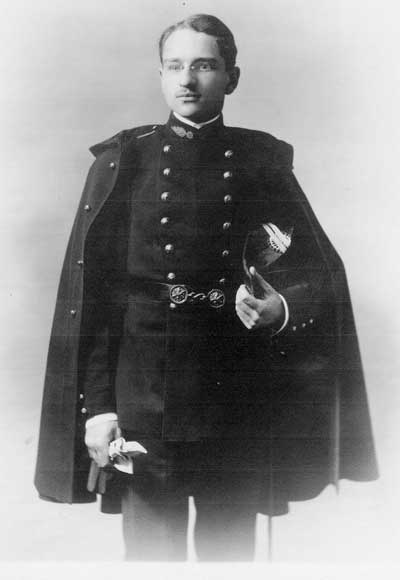
« La Compagnie française des pétroles » (l'ancêtre de Total) a été créée en 1924 et son principal actif est constitué des 25 % dans la « Turkish Petroleum Company ». Dirigée par Ernest Mercier (1878-1955), la CFP doit gérer les intérêts français au Moyen-Orient. Bien connu déjà en tant que pionnier de l'industrie électrique en France, Ernest Mercier - cet ancien ingénieur du Génie Maritime (blessé d'un éclat d'obus au pied alors qu’il commande sur le Danube des troupes roumaines pendant la Grande Guerre), avait débuté dans l'industrie du pétrole en 1921, époque à laquelle il était devenu président de « l'Omnium International des pétroles ». En 1922, il avait pris, avec le groupe de l'Anglo-Persian, le contrôle de la « Steaua Română », la plus importante société pétrolière de Roumanie ; la même année, il avait créé la « Steaua Française », dont il était devenu le président.


Les liens de la CFP avec la Roumanie étaient très forts. La Compagnie n'y avait pas de participation significative, mais son président, Ernest Mercier, était aussi président de « l'Omnium français de pétrole », société issue de la fusion en 1938 de « l'Omnium international des pétroles » et de la « Steaua française ». L'OIP avait une participation de 29% dans la « Columbia », importante société roumaine et 12,5% dans la « Steaua Română ». CFP jouait dans cette dernière société le rôle d'opérateur technique et Mercier devait y envoyer, pour les tester, plusieurs de ses futurs collaborateurs à la direction de la CFP. Dans le domaine de la production, la CFP formait ses ingénieurs sur le tas en Roumanie, à la « Steaua Română » (environ 100 kilomètres au nord de Bucarest). Elle en forma peu, mais d'excellents, ceux qui furent destinés aux postes de commande plus tard : Victor de Metz, tête de file, futur président de la CFP de 1945 à 1971, René de Panafieu, les frères Raoul et Edmond Chappelet, Bernadac, Arnoud, Paclet, Raymond Godet, Amédée Maratier, Louis Cauchois (nommé en 1934 chef des ateliers à Moreni, environ 100 km au nord-ouest de Bucarest. En 1691, Moreni devint le troisième endroit dans le monde où du pétrole fut extrait).

Une sortie à Golești, Roumanie en 1937. Amédée Maratier est assis en bas à droite.
Les trois derniers ingénieurs (Godet, Maratier et Cauchois) furent par la suite les fondateurs, en 1942, de « Forex – Forages et Exploitations Pétrolières ». En 1971, « Shlumberger » acquiert la totalité des actions de « Forex » et en 1984 l'entreprise américaine « Sud-Drilling Company - Sedco » est fusionnée avec « Forex » pour devenir en 1985 la « Sedco Forex Drilling », puis deviendra en 1999 la « Transocean Sedco Forex » (l'un des plus grands entrepreneurs de forage offshore au monde basé à Vernier, en Suisse).

« Steaua Română » Câmpina est la plus ancienne raffinerie de Roumanie, fondé en 1895.

Ces expatriés, la plupart ingénieurs, avaient été tentés par la Roumanie car la vie y était agréable sous le règne du Roi Carol Ier, l’influence de la culture française était très développée et la production pétrolière importante.

A cette époque, bien antérieure au forage au rotary, les premiers puits étaient creusés à la main et entretoisés avec du bois, à la manière des puisatiers de nos campagnes et l’ingénieur géologue était descendu quotidiennement assis sur le récipient qui servait à remonter les déblais pour prélever les échantillons et apprécier la nature des terrains ; on arrivait ainsi vers 300 m avec une ventilation rudimentaire, la découverte s’accompagnait en général d’une belle éruption et on recueillait le pétrole sur le terrain environnant car on avait eu la sagesse d’entourer le puits de remblais de terre.

Elèves d'école Maîtres Sondeurs, 1ère année, Moreni, 1920
En 1937, 40 % des importations françaises proviennent de l’Irak, 22 % des États-Unis, 9 % du Venezuela et 8 % de la Roumanie.

Deux ans avant l'apparition de la Compagnie française des pétroles, la société pétrolière belge « PetroFina » -  une entreprise qui va jouer un rôle clé dans l’économie et la société de la Belgique du XXe siècle, a été créé en 1920 (25 février) par un groupe d'investisseurs et de banquiers anversois, les frères Hector et Fernand Carlier et le ministre Aloys Van de Vyvere. La fondation de la société est issue du rachat à des banque allemandes de leurs actifs dans des entreprises roumaines.


La Compagnie Financière Belge des Pétroles « PetroFina » regroupe les actifs des entreprises roumaines : « Rumeensche Petroleummaatschappij » (La Compagnie Roumaine de Pétrole, plus connue sous le nom « Internaționala » ou « Interum »), « Concordia » (Société anonyme Roumaine pour l’industrie de Pétrole), « Sirius », « Creditul Petrolifer » et « Vega » (filiale de « Concordia »).

Ces entreprises roumaines - regroupées sous le nom de la « Compagnie Financière Belge des Pétroles », couvrent alors l'ensemble des opérations relatives à l'industrie du pétrole: l'exploration, l'extraction, la production - grâce à « Internaționala » et « Concordia », le raffinage à travers les installations de « Vega » - à Ploiesti (raffinerie fondé en 1905, avec le capital fourni par Deutsche Bank), le transport, la fabrication et l'emmagasinage des produits, ainsi que l'entretien du matériel de forage par l'entremise notamment du « Creditul Petrolifer » (société crée en 1906, par Mauriciu Blank - banquier roumain, né à Pitesti). Autant d'activités qui deviennent celles d’une toute nouvelle compagnie, qui prendra en 1922 le nom de son adresse télégraphique : « PetroFina » (devenu en 1958 : « Fina »).

Mais pour revenir en France, la dénomination originaire de « La Compagnie française des pétroles » a été changée le 21 juin 1985, en « TOTAL – Compagnie française des pétroles » (TOTAL CFP). Par les rachats successifs de la société pétrolière belge « Fina » en 1999, puis par le rachat d’« Elf-Aquitaine » en 2000, la force de « TOTAL » a été renforcé et le nom change de nouveau.
Enfin, en 2003, « Total Fina Elf », rebaptisé « TOTAL S.A. » est la première compagnie pétrolière et gazière française et la quatrième au niveau international.


La Compagnie française de raffinage dépose la marque Total en 1953. Fierté nationale, l'entreprise choisit un logo tricolore qui évoque clairement la dimension française du carburant. Si le bleu, le blanc et le rouge ne disparaitront jamais, l'orange fait son apparition dans les années 1970. Le logo actuel est né après la fusion avec Elf et PetroFina.


Racines et ailes d'Air France

« Faire du ciel le plus bel endroit de la Terre »
Slogan de la compagnie Air France, avant 2014.


À la fin des années 1920, alors que la plupart des pays se sont déjà dotés de grandes compagnies nationales (KLM en 1919, Qantas en 1920, Delta Air Lines et Imperial Airways en 1924, Lufthansa, United Airlines et Pan Am en 1926, American Airlines en 1930), l'aéronautique française est morcelée et affaiblie par la Grande Dépression.

Dans ce contexte économique, le Parlement français vote une loi de fusion des 4 compagnies principales du transport aérien français : la « CIDNA » - ex. « Franco-Roumaine », « Air Orient », « Air Union », et les lignes « Farman ». Les quatre compagnies fusionnées forment le 19 mai 1933 la SCELA : « Société centrale pour l'exploitation des lignes aériennes ». Le 31 mai 1933, la SCELA rachète les actifs de « l'Aéropostale » (du banquier Marcel Bouilloux-Lafont). C'est au cours d'une conférence de presse annonçant cette fusion que le journaliste Georges Raffalovitch, doyen dans le monde de la presse aéronautique, propose de baptiser la nouvelle compagnie « Air France ».

Mais, qui était cette compagnie Franco-Roumaine ou CIDNA (« Compagnie Internationale de Navigation Aérienne ») une des compagnies à l'origine d’« Air France » ?


Nous sommes en avril 1920. La guerre est finie : Pierre Claret de Fleurieu, pilote de chasse émérite, décide de quitter l’armée. Homme de challenge, il entre dans la succursale française d’une grande banque roumaine : la banque Marmarosch Blank. Et c’est avec le culot de ses 23 ans qu’il propose à Aristide Blanck (le fils de Mauriciu Blank), le président de la banque, un projet qu’il qualifiait lui-même de fou : créer la première grande ligne aérienne internationale du monde. Une ligne régulière à travers l’Europe, qui desservira la Tchécoslovaquie, la Pologne, la Hongrie, la Roumanie et pourquoi pas jusqu’à Constantinople !

Pierre Claret de Fleurieu (1896-1976)

Le 23 Avril 1920 le banquier roumain convoque Pierre Claret de Fleurieu dans son bureau, le nomme immédiatement Directeur Général de la Compagnie Franco-Roumaine de navigation aérienne et ... rédige un chèque de plusieurs millions à son nom : « Vous commencez demain, je vous fais une confiance totale, marchez je vous suivrai ».

En 1922, la « Compagnie Franco-Roumaine de Navigation Aérienne » a le réseau le plus important du monde avec 3144 km. Elle assure la présence des ailes françaises sur toute l’Europe centrale et orientale. Les avions français font escale tous les jours à Vienne, Budapest, Bucarest et à Constantinople.


Dans les années ‘20, grâce aux services aériens développés par la CIDNA, Bucarest est à 24 heures de vol de Paris (alors qu’il faut trois jours par le train) et Moscou à 20 heures seulement.


Sources :
L'Entente cordiale, Belgique - Roumanie
Musée du pétrole, Ploiești
Petroblog - Romanian Petroleum History
The battle for Oil
Le pétrole déjà: l'empereur Guillaume II visite la raffinerie "Steaua Română" (min. 3:20) avec le général - puis feld-maréchal, allemand August von Mackensen (septembre 1917):

Focul de 850 de zile de la Moreni
La stratégie de la Compagnie Française des Pétroles durant la Seconde Guerre Mondiale
Ernest Frédéric Honorat Mercier (1878-1955)
Amédée Maratier
La mission Léon Wenger
Roumanie, berceau de FOREX
La politique française du pétrole à l’issue de la première guerre mondiale
Précurseur de Forex, Raymond Godet président-fondateur
L'empereur Guillaume II visite la raffinerie "Steaua Română" (YouTube min. 3:20) avec le général - puis feld-maréchal, allemand August von Mackensen (septembre 1917).
La Seconde Guerre mondiale achève l'ère de la mécanisation des armées. Pour être le plus opérationnels, l'Allemagne et le Japon vont avoir besoin d'une ressource indispensable : le pétrole, et "La Roumanie fournit toutes les besoins du Reich en pétrole; le pétrole de Ploiești est devenu indispensable pour Hitler" (YouTube min. 14:00).
La Franco-Roumaine
Pierre Claret de Fleurieu (le fondateur - en 1920, de la compagnie franco-roumaine de navigation aérienne)

23) The battle for Oil and a brief history of the Romanian petroleum industry

"He who will have the oil will have domination.
The nation that will be the owner of this precious fuel will see billions."
French energy minister Henry Bérenger to French Prime Minister Georges Clemenceau, 12 December 1919.


Following World War I, Romania experienced a serious increase in size and power. During the interwar period, Romania was an important exporter of raw materials, first of all grains, corn, oil and timber. When it came to oil exports it was second, only behind the USSR in Europe, and sixth in the world.
During World War I, the oil field installations were destroyed by sabotage, and were partially rebuilt by Germany between 1916 and 1918. Their rehabilitation continued after the war and was finished around 1924.
Between 1918 and 1924, 101 new companies were registered in Romania, most of them with Romanian capital, whose activity was the extraction, transformation or distribution of crude oil and/or its derivatives. Some of them – like the Creditul Minier, Industria Romana de Petrol (known as IRDP), and Pacura Romaneasca were quite important, while other ones were small enterprises. In 1920 when the Romanian state, through its Liberal government, offered state monopoly-like concession to the IRDP, diplomats of England, the USA, France and the Netherlands exercised serious pressure, even threatening with retrieval of international loan for rebuilding the country from London’s financial markets. The government had to give up the idea.


Among foreign investments, the English was the most important one, and replaced in a successful way former German and Austro-Hungarian interests. The most important company was the British-Dutch Royal Dutch-Shell, through its affiliated branch-company, the Astra Română. In 1920 other English companies penetrated the Romanian market, like the Anglo-Persian oil Co Ltd., through the Steaua Română (having previously German capital), the Sospiro Oilfields, and the Phoenix Oil and Transport Co. Ltd.
As a result of peace treaties, French capital received equal share with British one from former interests of German and Austro-Hungarian firms. Just as British investors cooperated with Dutch ones, the French cooperated with Belgians. The most important representative of French-Dutch capital was the cartel-like company "Omnium International des Petroles", with its headquarter in Paris. Among its stockholders were firms like "Banque de Paris et des Pays Bas - Paribas", Banque "Mirabaud et Co.", "Louis Hirsch et Co.", "Petroles des Roumanie-Anvers" - its main branch company in Romania was the Colombia, founded in 1920. Other companies with French or Belgian interests were the "Petrol Block", "Aquila Franco-Romana" and "Compagnie Financiere Belge des Petroles".


American capital missed the opportunity of redistributing “war prey” (investments of Central Powers) between British, French and Romanian capitals. Instead, the Standard Oil invested in the  already existing Romano-Americana company, in which it was the only shareholder. The Romano-Americana quickly became the second major oil producer company after the Astra Romana. US diplomats in general were very active in promoting economic interests from American investors.
Italian capital entered Romania during the mid-twenties, through the AGIP, whose base was in the Prahova valley. Interestingly, unlike England and France, who used refineries on Romanian soil where oil products were transported through pipelines till the port of Constanta, Italians preferred in the mid-thirties to use the AGIP refinery in Fiume. In 1934, Italian authorities asked AGIP to base its supply for the largest part on Romanian oil (around two thirds) leaving the other to short term contracts basically with the Soviet Union. With all this, 1934, exploitation in the Prahova valley declined and Italy never regained its position, facing a far stronger competitor in Nazi Germany. The AGIP often collaborated with American-owned companies, for example, rotary drilling technology was adopted with the help of American engineers.
German direct investments, compared to other ones, were insignificant both under the Weimar Republic and the Nazi Third Reich. On the other hand, Germany in the thirties quickly became the most important partner of Romania when it came to oil import.


In 1938 Germany became Romania´s most important trading partner: 48,5 percent of Romanian imports came from Germany, and 35,9 percent was the share in destination of exports toward Germany. In 1939, the “German-Romanian Treaty for the Development of Economic Relations between the Two Countries” was signed, which granted, for ten years, German primacy in Romanian bilateral trade. The treaty provided German priority in Romanian exports for agricultural, timber and oil products. In exchange Germany granted technical know-how and war equipment. Change could be made through direct exchange, products for products, no use of currency needing to be involved.
The treaty strengthened German economic power considerably and contributed on proving an enhanced economic capability of its war efforts. During World War II, Nazi Germany penetrated the Romanian economy even more, subordinating it to its war objectives.


Germany did not have the petroleum to wage a war of any duration. The basic calculations were stark. The Germans estimated that they needed 12 million tons of oil annually to wage war. The synthetic petroleum industry in the Ruhr based on coal liquidficatioin would by the late 1930s produce about 3 million tons, leaving a defivcit of 9 million tons. Germany could not go to war without a secure source of additional oil. The oil could not be imported by sea because of the Royal Navy. The answer to this shortfall was Romania. The Romanian oil fields centered around Ploesti produced about 7 million tons annually. Romania posed some initial problems because the country had sided with the Allies in World War I and as a result had been rewarded with territorial concessions at the expense of its neighbors which had sided with the Central Powers. The Romanian royal family was a German family, but Romania had sided with the Allies in World War I. Romania agreed to sell most of its oil to Germany (1939). British efforts to bid for the oil failed. The Nazis next convinced the Romanians to expel British technicians (July 1940). General Ion Antonescu, who had been the Minister of War, for King Carol when he seized power (September 6, 1940). This meant that the Nazis had essentially turned Romanian into a satellite state and ally.


Operation Tidal Wave was an air attack by bombers of the United States Army Air Forces (USAAF) based in Libya on nine oil refineries around Ploiești (located ~56 km north of Bucharest - capital city of Romania), on 1 August 1943, during World War II. It was a strategic bombing mission and part of the "oil campaign" to deny petroleum-based fuel to the Axis. The mission resulted in "no curtailment of overall product output", and so was deemed unsuccessful.
This mission was one of the costliest for the USAAF in the European Theater, with 53 aircraft and 660 aircrewmen lost. It was the worst loss ever suffered by the USAAF on a single mission, and its date was later referred to as "Black Sunday". Five Medals of Honor and numerous Distinguished Service Crosses were awarded to Operation Tidal Wave crew members.


Click on the next image to listen Hitler's voice (check min. 7:50 of 11:22 of the YouTube video clip):


Two thousand years ago, oil from seeps was exploited in the Roman province of Dacia, where it was called picula. The first attestation of Oil exploitation in Romania dates from the II century a.d. and continues in the next centuries, being proven by the numerous potteries with marks of crude oil on them, dated in the II-XVI centuries.
The first document from the Romanian historical province of Moldavia regarding fuel oil is dated October 4th 1440, while the first records mentioning oil from Wallachia is dated 1517. In the beginning, crude oil exploitation simply meant collection from the shallow pits and ditches in the outcrops of the Sub-Carpathian area. The technique involved digging small holes into the ground, where fuel oil was collected, while the crude oil was channelled through ditches towards a collecting pit.
The beginning of the Romanian petroleum industry dates back to 1769 with the documentation of rudimentary crude oil extraction in Moldavia by Dimitrie Cantemir, a former Prince of Moldavia, who published the account in "Descriptio Moldaviae".

Romania was the first country in the world (1857) with a petroleum production officially registered in the international statistics. „The Science of Petroleum” certifies in 1938 the fact that Romania was the first country in the world with an oil production of 275 tones officially registered in the international statistics. It was followed by the United States in 1859, Italy in 1860, Canada in 1862 and Russia in 1863.

The first processing equipments of petroleum in the world are considered the “oil pumps” from Lucacesti-Bacau, belonging to N. Choss in 1840 and M. Heimsohn in 1844. This were only simple handmade workshops, equipped with rudimentary methods which were using for refining a system similar to the one for obtaining "țuică" (a traditional Romanian spirit that contains 28%-60% alcohol by volume, prepared from plums) in a rustic boiler. Distillation on industrial way starts with the refinery built by Mehedinteanu brothers at the periphery of Ploiesti city, near the South Station, on 174, Buna Vestire Street. The refinery installations were quite primitive, all the equipment being build up from iron or raw iron cylindrical vessels, warmed up directly with wood fire. This equipment was ordered in Germany from Moltrecht company which was building boilers for bituminous shale distillation, and in December 1856 starts the construction of the gas factory from Ploiesti, on the name of Marin Mehedinteanu.


Bucharest was the world’s first city public illuminated with kerosene. The oil offered by Mehedinteanu brothers for public illumination had incontestable properties: colorless and with no smell, burning with a light flame, with a constant intensity and shape, without smoke and without ash or resinous compounds in the wick. This important properties of the product as well as the offer of 335 lei per year for each street lamp had practically excluded all the competition, the other offers which proposed as a fuel the rape or nut oil were taking the costs up to 600 lei per year.
Teodor Mehedinteanu’s offer was approved on the 8-th October 1856 and so Bucharest would have been illuminated with 1000 street lamps. At 1-st April 1857- the date for coming into operation of the contract for the capital illumination - everything was ready and working well.

Romania was the first country in the world which exported gasoline (essence, benzină) from 1900.


The concept of sonic drilling technology was born nearly 100 years ago (~1918) when the civil engineer George Constantinesco wrote a treatise for the British Admiralty called the Theory of Sonics.


In 1912, engineer Virgiliu Tacit patented the blow-out preventer, a remote-controlled valve with a piston, which can stand pressures of up to 100 atmospheres. The invention was then taken over by Germany, the Austro-Hungarian empire and Mexico.


In 1931, the engineer A. Dragulanescu, the director of “Steaua Română” Society presented during the “Engineers and Technicians Associations of the Mine Industry Congress” a method of using unique tubage column in the well field. Dragulanescu’s innovations: drilling on right hole, without deviations reductions of the column number etc. concurred to the same economical saving of 50% drilled linear meters.

Ion Șt. Basgan (24 iunie 1902, Focșani - 15 decembrie 1980, Bucharest)

Dr. Eng. Ion Basgan the one that using the sonicity principle have licensed in 1934 in Romania and USA a new drilling system: “Method for improving the efficiency and perfecting the rotative drilling through percussive rotation and hydrodynamic pressure absorption.” Basgan procedure had made a fulminant carrier in USA being used in Romania too after 1944 without its merits being recognized.


Lazăr Edeleanu elaborated in 1907 a method of kerosene refining and later other oil products too, through selective refinement, using liquid sulphur dioxide.
Since 1910 Edeleanu himself settled in Germany there he founded a company called "Allgemeine Gesellschaft für Chemische Industrie". Due to the success of the logo "Edeleanu", since 1930 the company changed its name to Edeleanu GmbH. During the National Socialist regime was bought by the Deutsche Erdöl-AG, later changed several times its owners and in 2002 was acquired by Uhde GmbH, which is owned by Thyssen-Krupp trust. The name Edeleanu stayed in use for the refinery department till nowadays.
Lazăr Edeleanu came back to Romania and died in Bucharest in April 1941.


Following World War II, a heavy reconstruction of the petrochemical facilities and expansion was done. Possessing substantial oil refining capacities, Romania is particularly interested in the Central Asia-Europe pipelines and seeks to strengthen its relations with some Arab states of the Persian Gulf. With 10 refineries and an overall refining capacity of approximately 504,000 bbl/d (80,100 m3/d), Romania has the largest refining industry in the region. The refining capacity far exceeds domestic demand for refined petroleum products, allowing the country to export a wide range of oil products and petrochemicals - such as lubricants, bitumen and fertilizers, throughout the region.
Since 2004, most of the industry has been privatized. The major changes in the sector were Petrom's privatization with OMV at the end of 2004 (that resulted in a price increase of the oil refined and petrochemical products in 2005 to a level close to the CEE one; the Petrom privatisation has been plagued by controversy in Romania) and the acquisition of Rompetrol Rafinare by KazMunaiGaz in 2007.


I'll talk to you about the oil people
and their black soul, more flammable than oil.

I'll talk to you about me
because no one more than me can be a man of oil
and my black and flammable soul
makes me speak to you other people, with all the brutality.

That is how oil must be talked about: brutally.

I'll talk to you about his crimes and his people
so I will speak to you of my crimes
and be sure that nobody could know the soul, the oil and the crimes better
and no one could talk to you more brutally than I did.

I, who am black and ugly,
who, like the oil-bearing hills,
have always had something horrible smoldering in my innards,
I, who soil and destroy everything I touch,
who am as foul, fervent and ignorant as oil
and, like it, explode
without caring about the calamity my words bring into the world.
That's me and now I will tell you about oil and its crimes.

Listen:
I still do not know how dirty and black the oil is
and how dirty and black are his men.

Listen:
You know the oil only as pure essence in the test tubes
You do not know like me , thousand murders
and thousand women who were lured
to sell their last piece of land on a night of love
You do not know the false vows and the sordid soul of the oil apprentices,
You do not know the drillers that burned alive in the flame
in the great fires caused by the derricks' owners themselves
to squeeze the last money from insurance companies;
You do not know all this
and you know nothing of oil and its crimes.

But you do not know me either
because all that I have told you so far
is not at all a scream of revolt for the fate of women and the wronged drillers,
but a beginning of the hymn for oil and for his people's atrocities,
a beginning of hymn for those who are able to lie, deceive and steal,
a beginning of hymn for me and all my brothers in infamy.
I do not love oil when the pure essence gets into the test tubes,
I love it so he gets out of the ground: dirty,
I love him with anger, with passion
and I want to glorify my terrible race of oil people.

It was a wet night of autumn,
when it came to my mind to make myself a man of oil.

That was it: a wet night of autumn
and God wanted me to quickly become a man of oil
and my forces to fight the most evil men.

I will sing the village I lived in first
and in which my hands and my soul were dirty
as much as they could get dirty.

I'm gonna sing the Buștenari men, the terrible and monstrous village of Buștenari,
in which every stone speaks of me and of my crimes,
in which every woman can tell you how cynical and lying they are
and I will then sing the derricks that I shed money on, like old mistresses.

But even when I'm singing the village and I'm glorifying the drillers,
I will sing all of myself
and if I should glorify places I have not seen and women I have not loved,
I would just glorify also myself,
because in me there are struggling places I have not seen and women I have not loved,
and I was able to crush Him and remove Him out of my way without a pity,
as He says in the Bible, that you must strike the serpent's head
as I crushed the head of the man who trusted me:
I remember:
I closed my eyes, I said "Oh, God!" and I struck
and then I have strucked several times without closing my eyes and no longer saying "Oh, God!"
and when I came out I was proud to see my heart beating regularly.

So it was every time:
my heart beat regularly
And that made me trust myself;
And I am sure that the laws of nature are with me and that I am right.

Geo Bogza - "Petroliferous Poem" (1932)


Vă voi vorbi despre oamenii petrolului
şi despre sufletul lor negru şi mai inflamabil decât petrolul.

Vă voi vorbi despre mine
fiindcă nimeni mai mult decât mine nu poate fi un om al petrolului
şi sufletul meu negru şi inflamabil
mă face să vă vorbesc vouă celorlalţi oameni, cu toată brutalitatea.

Aşa trebuie vorbit despre petrol: cu brutalitate.

Vă voi vorbi despre crimele lui şi ale oamenilor lui
vă voi vorbi aşadar despre crimele mele
şi fiţi siguri că nimeni n-ar putea cunoaşte mai bine sufletul, petrolul şi crimele
şi nimeni nu v-ar putea vorbi cu mai multă brutalitate ca mine.

Eu care sunt negru şi urât
şi care asemeni dealurilor petrolifere
am mocnit întotdeauna ceva groaznic în măruntaiele mele
eu care murdăresc şi distrug tot ceea ce ating
şi care asemeni petrolului sunt ticălos, pătimaş şi ignorant
şi izbucnesc din mine
şi nu-mi pasă de prăpădul pe care vorbele mele îl aduc pe lume.

Eu acesta vă voi vorbi despre petrol şi crimele lui.
Ascultaţi:
voi încă nu cunoaşteţi cât de murdar şi negru e petrolul
şi cât de murdari şi negri sunt oamenii lui.

Ascultaţi:
voi nu cunoaşteţi petrolul decât ca esenţă pură în eprubete
voi nu cunoaşteţi ca mine o mie de mârşăvii şi asasinate
cele o mie de femei care au fost ademenite
să-şi vândă ultima bucată de pământ pe o noapte de dragoste
voi nu cunoaşteţi jurămintele false şi sufletul sordid al petroliştilor începători
voi nu cunoaşteţi sondorii care au ars de vii în flăcări
în marile incendii provocate de înşişi stăpânii sondelor
pentru a stoarce ultimii bani de la societăţile de asigurare;
voi nu cunoaşteţi toate acestea
şi nu cunoaşteţi nimic din petrol şi din crimele lui.

Dar voi nu ma cunoaşteţi nici pe mine
fiindcă tot ce v-am spus până acum
nu e deloc un ţipăt de revoltă pentru soarta femeilor şi a sondorilor înşelaţi
ci un început de imn pentru petrol şi pentru mârşăviile oamenilor lui
un început de imn pentru aceia ce sunt capabili să mintă, să înşele şi să fure
un început de imn pentru mine şi toţi fraţii mei întru infamie
eu nu iubesc petrolul când ajunge esenţă pură în eprubete
eu îl iubesc aşa cu iese din pământ, murdar şi prin procedee murdare
îl iubesc cu furie, cu pasiune
şi vreau să cânt rasa mea teribilă de oameni ai petrolului.

Era o noapte umedă de toamnă
când mi-a venit în minte ca din pricina mârşăviilor de care sunt capabil
să mă fac om al petrolului.

Aşa era: o noapte umedă de toamnă
şi dumnezeu a vrut ca eu să devin repede un om al petrolului
şi forţele mele să le întreacă pe ale celor mai ticăloşi oameni

Am să cânt mai întâi satul în care am trăit
şi în care mâinile şi sufletul meu s-au murdărit
atât cât au putut ele să se murdărească.

Am să cânt Buştenarii, îngrozitorul şi monstruosul sat Buştenari
în care fiecare piatră vorbeşte de mine şi de crimele mele
în care fiecare femei vă poate spune cât sunt de cinic şi de mincinos
şi am să cânt apoi sondele pe care le-am stors de bani ca pe nişte amante bătrâne.

Dar şi atunci când am să cânt satul şi am să cânt sondele,
am să mă cânt tot pe mine
şi dacă ar trebui să cânt locuri pe care nu le-am văzut şi femei pe care nu le-am iubit
m-aş cânta tot pe mine
fiindcă în mine se zbat locuri pe care nu le-am văzut şi femei pe care nu le-am iubit,
şi am putut să-I zdrobesc şi să-I înlătur din drumul meu fără nici o milă
aşa cum spune în biblie că trebuie să striveşti capul şarpelui
aşa cum am strivit capul omului care avusese încredere în mine,
îmi aduc aminte:
am închis ochii, am zis doamne şi am izbit
şi pe urmă am izbit de mai multe ori fără să închid ochii şi fără să mai zic doamne
şi când am ieşit am fost mândru văzând că inima mea bate regulat.

Aşa a fost de fiecare dată:
inima mea a bătut regulat
şi asta m-a făcut să am încredere în mine
şi să fiu sigur că legile naturii sunt cu mine şi că îmi dau dreptate.


Sources:
Petroblog - Romanian Petroleum History
Competition for Romanian Oil in the Interwar period
Blowout preventer
The case of Ion Basgan
Ion Basgan a Romanian Inventor
The history of Romanian Oil Industry
Aspects of technical progresses in Romanian petroleum industry
O istorie a petrolului românesc
Despre petrol
Romania has marked the world history of oil
Exxon Corporation, was known as Standard Oil Company (New Jersey), until 1972. Esso is a trading name for ExxonMobil and its related companies. The name is a phonetic version of the initials of the pre-1911 Standard Oil (SO = Esso).

Oh, but it is dirty!
- this little filling station,
oil-soaked, oil-permeated
to a disturbing, over-all
black translucency.
Be careful with that match!

Somebody embroidered the doily.
Somebody waters the plant,
or oils it, maybe. Somebody
arranges the rows of cans
so that they softly say:
Esso—so—so—so
to high-strung automobiles.
Somebody loves us all.

"Filling Station" by Elizabeth Bishop (1911–1979)

POPULAR POSTS / POSTS POPULAIRES