Se afișează postările cu eticheta Transylvania. Afișați toate postările

44) Three things you didn't know about... Gold mining


Tenth in the world in terms of the diversity of minerals produced in the country, 60 different minerals are currently extracted and manufactured in Romania.
The Golden Quadrilateral in the Metaliferi Mountains (a mountain range in Transylvania, which belongs to the Western Romanian Carpathians) includes gold and silver deposits which constitute "the most productive gold area in Europe". The Golden Quadrilateral covers an area of approximately 500 km2 within the Apuseni Mountains ("Past and present mining in the Apuseni Mountains" study, 2006).

Roșia Montană Gold sample

Modern-day gold mining
The average gold content over the last 200 years of mining in Romanian Metaliferi Mountains is estimated at 10 grams per tonne (Udubaşa & Udubaşa study, 2004). Ghiţulescu & Socolescu estimated a total mined quantity of gold and silver of 85 tons untill 1941 (30 tons of gold and 55 tons of silver, since 1746). The highest level of gold production in Romania was reached in 1949 at 35 tons (400 kg in 2008 being the lowest level since January 01, 1942).
In Roșia Montană area is the largest gold deposit in continental Europe, estimated at over 300 tons of gold and 1600 tons of silver, having a value of $3 billion.
According to "Mineral assemblages at Săcărâmb" study, the open pit mine located near Certeju de Sus village, has estimated reserves of around 10 million tons grading 1~2 grams per tonne gold in the salband ore (~15 tons in total, having a value of ~$0.15 billion).
According to the World Gold Council (WGC), larger and better quality underground mines contain around 8 to 10 grams per tonne, with marginal underground mines have averages of around 4 to 6 grams per tonne. Open pit mines usually have lower grades from 1 to 4 grams per tonne.

Native Gold on Quartz from Romania

Ancient gold mining
The ancient gold mine in Rosia Montana, in the Apuseni Mountains of western Transylvania, should be considered: “the most extensive and most important underground Roman gold mine known anywhere", according to Andrew Wilson and David Mattingly, professors of Roman archeology at Oxford University and Leicester University respectively (2010).
Even before Romans, the Dacians traded this gold to the Greeks for fancy pottery and to the Scythians for amber. About 100 AD the Roman Emperor Trajan conquered Dacia - mainly in order to get this gold. The Romans used the Dacian gold to pay their army.
"Several well preserved mining works and many archaeological findings confirm the very early gold extraction. The Apuseni Mountains have been inhabited since the Stone Age. It is known that Apuseni gold was used by the Mycenaeans and the Trojans, and is believed to have been used also by the Pharaohs. The region was known as Dacia and inhabited by the Dacs. The Romans conquered this area and carried out tonnes of gold and silver. Trajan’s Column in Rome commemorates the importance of the conquest. It was calculated that the Romans had extracted about 150 tons of gold from Dacia" ("Past and present mining in the Apuseni Mountains"; Attila Toth - Eötvös Lóránd University, Budapest, Aurélie Quiquerez - University of Lausanne, István Marton - University of Geneva, 2006).


The Gold Museum
Also known as the Mineralogical Collection of Brad, The Gold Museum in the small Romanian city of Brad is the only one of its kind in Europe. Founded 100 years ago, the gallery contains a mind-blowing collection of over 2000 pieces of gold gathered here from across the world. A highlight of the museum, however, is the native gold which is displayed exactly as found in the mines of the Romanian mountains. The pieces are so unique and spectacular that their value does not depend on grammage anymore. For instance, a lizard shaped item of only seven tenths of a gram of gold has been evaluated at €3 million.

The Gold Museum in Brad

Sources:
Mining industry
Archaeology report stalls Romania plans to dig up ancient Roman gold mine
12 Things I Bet You Didn’t Know
Tellurium study: Popescu & Neacsu
Past and present mining in the Apuseni Mountains
Gold - Mining History for Kids
Gold Investing News
Goddess of the Earth
Apuseni Mountains

43) Goddess of the Earth - Tellurium

Tellurium (Latin tellus meaning "goddess of the earth") was discovered in the 18th century in a gold ore from the mines in Zlatna, near today's city of Sibiu, Romania.
This ore was known as "Faczebajer weißes blättriges Golderz" (white leafy gold ore from Faczebaja, German name of Facebánya, now Faţa Băii in Alba County) or antimonalischer Goldkies (antimonic gold pyrite), and, according to Anton von Rupprecht, was Spießglaskönig (argent molybdique), containing native antimony. In 1782 Franz-Joseph Müller von Reichenstein, who was then serving as the Austrian chief inspector of mines in Transylvania, concluded that the ore did not contain antimony, but that it was bismuth sulfide. The following year, he reported that this was erroneous and that the ore contained mostly gold and an unknown metal very similar to antimony. After a thorough investigation which lasted for three years and consisted of more than fifty tests, Müller determined the specific gravity of the mineral and noted the radish-like odor of the white smoke which passed off when the new metal was heated, the red color which the metal imparts to sulfuric acid, and the black precipitate which this solution gives when diluted with water. Nevertheless, he was not able to identify this metal and gave it the names aurum paradoxium and metallum problematicum, as it did not show the properties predicted for the expected antimony.

Industrial and Commercial Uses
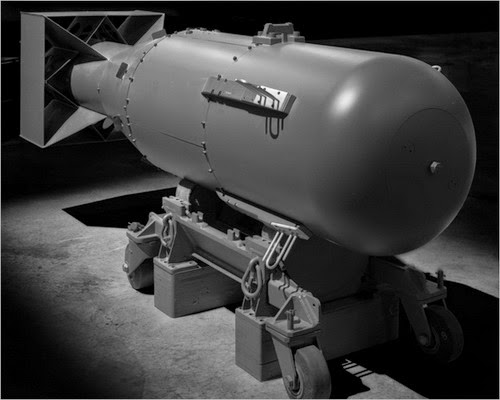
The first application of chemical bonding of tellurium was used in making the outer shell of the first atom bomb.
Tellurium has many unique industrial and commercial uses that improve product quality and quality-of-life. Many of these technologies that utilize tellurium have important uses for the energy industry, the military, and health industries. Tellurium is used to color glass and ceramics and can improve the machining quality of metal products. When added to copper alloys, tellurium makes the alloy more ductile, whereas it can prevent corrosion in lead products. Tellurium is an important component of infrared detectors used by the military as well as x-ray detectors used by a variety of fields including medicine, science, and security. In addition, tellurium-based catalysts are used to produce higher-quality rubber.
CdTe films are one of the highest efficiency photovoltaics, metals that convert sunlight directly into electrical power, at 11-13% efficiency and are, therefore, widely used in solar panels. CdTe is a thin-film semiconductor that absorbs sunlight.
Tellurium can be replaced by other elements in some of its uses. For many metallurgical uses, selenium, bismuth or lead are effective substitutes. Both selenium and sulfur can replace tellurium in rubber production.
Technologies based on tellurium have global impacts. As a photovoltaic, CdTe is the second most utilized solar cell in the world, soon said to surpass crystalline silicon and become the first. According to the US military, the tellurium-based infrared detectors are the reason that the military has such an advantage at night, an advantage which, in turn, has an effect on global and domestic politics.

Environmental Impacts
Tellurium extraction, as a byproduct of copper refinement, shares environmental impacts associated with copper mining and extraction. While a generally safe process, the removal of copper from other impurities in the ore is can lead to leaching of various hazardous sediments. In addition, the mining of copper tends to lead to reduced water flow and quality, disruption of soils and erosion of riverbanks, and reduction of air quality.

Resource Limitations vs. Demand
About 215-220 tons of Tellurium (Te) are mined across the globe every year. In 2006, the US produced 40% of production, Peru produced 30%, Japan produced 20%, and Canada produced 10% of the world's tellurium supply (since the chart can't be any bigger). The leading countries in production are the United States with 50 tons per year, Japan with 40 tons per year, Canada with 16 tons per year, and Peru with 7 tons per year (year 2009). When pure, Tellurium costs $24 per 100 grams. Because Tellurium is about as rare as platinum on earth, the United States Department of Energy expects a supply shortfall by the year 2025, despite the always improving extraction methods. As demand increases to provide the Tellurium needed for solar panels and other such things, supply will continue to decrease and thus the price will skyrocket. This will cause waves in the sustainable energy movement as well as military practices and modern medicine.


In Romanian Metaliferi Mountains, at Săcărâmb, where the average Au content over 200 years of mining is estimated at 10 g/tonne (Udubaşa & Udubaşa study, 2004), Ghiţulescu & Socolescu estimated a total mined quantity of Au and Ag of 85 tons untill 1941 (30 tons Au and 55 tons Ag). No data are available on the Tellurium content in the ore deposit or on the total Tellurium quantity mined. However, based on the Au:Te ratio of 1:2 in some of the most frequent Telluride occurring in the deposit (nagyágite and sylvanite), one can infer a Tellurium content 20 g/tonne and a total amount of 60 tons of Tellurium mined and unprocessed until 1941 (just dumped), from Săcărâmb ore deposit alone (as mentioned in the 2013 study: "Tellurium, Selenium and Cadmium resources in the waste dumps of Săcărâmb area: Apuseni Mountains, Romania. A preliminary estimation" – by Gheorghe C. Popescu, Antonela Neacşu, Mihaela Elena Cioacă & Grigore Buia).
According to another study: "Mineral assemblages at Săcărâmb", this mine has estimated reserves of around 10 million tons grading 1~2 g/tonne Gold in the salband ore (meaning a total amount of 20~40 tons of Tellurium; based on the Au:Te ratio of 1:2).


Sources:
The Importance of Tellurium as a Health Hazard in Industry
Tellurium Resources
Mineralogy, Resources, Energetic implications
Delaware Mineralogical Society
Tellurium
Carpathian Journal of Earth and Environmental Sciences
Golden Quadrilateral, Romania
Gold Rush In Romania

19) Les tablettes de Tărtăria (Tărtăria tablets)

The Tărtăria tablets are three tablets, discovered in 1961 by archaeologist Nicolae Vlassa at a Neolithic site in the village of Tărtăria (about 30 km from Alba Iulia), in Romania. The tablets, dated to around 5300 BC, bear incised symbols - the Vinča symbols - and have been the subject of considerable controversy among archaeologists, some of whom claim that the symbols represent the earliest known form of writing in the world.


Les tablettes de Tărtăria sont trois tablettes découvertes dans une petite localité au centre de la Roumanie, issues de la civilisation de Vinča, qui constituent un artefact exceptionnel et controversé. Ces tablettes décrivent le calendrier agricole lunaire, commun à la plupart des civilisations mésopotamiennes et nordiques 2000 ans avant notre ère. A contrario, les Égyptiens anciens se basaient sur le lever de l'étoile Sotis.


L'amulette ronde montre les travaux agricoles à effectuer en fonction des phases de la lune et des saisons. Les autres tablettes montrent la saison de la période de reproduction du bétail et la période de la chasse ou de l'abattage des bêtes. Il ne s'agit pas d'une écriture mais d'une représentation probablement à vocation éducative.


Découvertes dans une tombe, près d'un squelette, ces tablettes (âgés probablement entre 5500 et 5000 ans av. J.C.) ressemblent aux tablettes sumériennes à cause de leur structure proto-littéraire. Cela laisserait donc supposer que l’écriture a vu le jour non pas en Mésopotamie, berceau de la civilisation de Sumer, mais au cœur des inhospitalières steppes de l’Europe orientale.


Cette théorie peut sembler hasardeuse. En effet, si l’écriture est apparue en Europe à l’Âge de pierre et non à Sumer à l’Âge du bronze, on se demande comment elle aurait atteint la lointaine Sumer 1000 ans avant l’île crétoise?
Des savants russes, américains, bulgares et britanniques suggèrent que le peuple de Sumer a émigré vers l'Orient à partir de l'espace carpato-danubien, ce qui pourrait expliquer les différences surprenantes entre les Sumériens et leurs voisins sémites.


La culture Vinča (entre -6000 et -3000 av. J.C.), dite aussi Vieil européen, est une culture préhistorique du Néolithique. La même culture est connue comme culture de Turdas en Roumanie.


Elle tire son nom de la ville de Vinča, près de Belgrade, en Serbie où une équipe d’archéologues dirigée par Miloje Vasić a effectué des fouilles qui ont mis au jour d’importants vestiges en 1908. Elle peuplait les régions à proximité du Danube, comme la Roumanie, la Bulgarie, la Serbie, mais il en reste des traces un peu partout dans les Balkans.


Vizualizare hartă mărită: Tărtăria

Sources:
Is the Danube Valley Civilisation script the oldest writing in the world? Harald Haarmann, a German linguistic and cultural scientist, currently vice-president of the Institute of Archaeomythology, and leading specialist in ancient scripts and ancient languages, firmly supports the view that the Danube script is the oldest writing in the world.
Signes, inscriptions, organisation et messages de l'ecriture Proto-Europeenne
Enigmes archéologiques: Tablettes de Tartarie
Wikipédia: Tablettes de Tărtăria
History of writing
The Homeland Reclaimed
Marija Gimbutas
VINČA: La « Bruxelles » oubliée de l’ère néolithique
Religion and ritual of the Cucuteni–Trypillian culture
Old European / Vinča / Danube script
Download Vinča font (TrueType, 55K)


Le  Dacia préhistorique (en anglais)...


18) Anonymus about... Transylvania (~ 9th century)

According to the Gesta Ungarorum (chapter: "Of the land of Ultrasilvana"), on reaching the Carpathian Mountains (~896), the Magyars found there three voivodeships: that of Menumorut in Crişana, of Glad in the Banat, and of Gelou in central Transylvania. Duke Gelou (Hungarian: Gyalu) is described as being a “certain Romanian”.


"And while they tarried there some while, Tuhutum father of Horca, as he was a shrewd man, when he learned from the inhabitants of the goodness of the land of Transylvania, where Gelou, a certain Vlach, held sway, strove through the grace of Duke Árpád, his lord, to acquire the land of Transylvania for himself and his posterity." (see the Remark, hereunder)


Chapter 24 of The Deeds of the Hungarians - Of the land of Transylvania.
Gesta Ungarorum - written by Anonymi Bele Regis Notarii ('the anonymous notary of king Bela').
The chronicle was written probably between 1196 and 1203.
Anonymus was employed at the time of writing as a notarias, presumably in the court of Béla III of Hungary (1172–1196). He is most famous for his work Gesta Hungarorum ("The Deeds of the Hungarians"), written in Latin around 1100~1200. This work provides the most detailed history of the arrival of the Hungarians to the Carpathian Basin.
The only surviving manuscript is from the 13th century and is in the National Széchényi Library in Budapest. It has been translated into Hungarian by István Lethenyey, canon of Pécs (1791), István Mándy (1799), and Károly Szabó (1860).
It is known from his Gesta Hungarorum that he was from the upper Tisza region and was closely connected to the Aba family of that region. In the preface, he wrote that he studied in Western Europe (probably Paris), where he learned the genre in which he wrote his Gesta.


Remark: The Tale of Bygone Years (Nestor's Chronicle ~1113) confirmed the statement of Anonymus:

"In the year 6406 (898), the Hungarians passed near Kiev, over the hill which is now called Ugor Koie, reached the Dnieper and they stretched their tents, because they were nomads as the Polovcs. Coming from the east, they went rushing through the high mountains, which were called Hungarian (the Carpathians) and they began to struggle with Volochs (Vlachs, Romanians) and Slavs who lived there. The Slavs were set there before and the Volochs conquered the country of the Slavs. But the Hungarians drove out afterwards the Volochs, they conquered the country and sat there together with the Slavs; since then the country is called Hungary."


Sources:
http://en.wikipedia.org/wiki/Origin_of_the_Romanians
http://en.wikipedia.org/wiki/Nestor_the_Chronicler
http://tiparituriromanesti.wordpress.com/2012/06/26/cronica-lui-nestor-despre-romani-din-manuscrisul-calugarului-laurentiu-1377/
http://peopletales.blogspot.fr/2013/04/1.html
http://www.verbalissimo.com/main/offers/inscriptions/europe/hungary/gb_budapest_anonymus.htm
http://en.wikipedia.org/wiki/History_of_Transylvania
http://en.wikipedia.org/wiki/Gelou
http://en.wikipedia.org/wiki/Glad_(duke)
http://en.wikipedia.org/wiki/Menumorut
http://en.wikipedia.org/wiki/Gesta_Hungarorum
http://eprints.ucl.ac.uk/18975/1/18975.pdf

POPULAR POSTS / POSTS POPULAIRES